
The Legislator Guide for Circular Policy

Join legislators, industry, and experts

Strategy Under Uncertainty

Lessons from the Source Reduction Summit

A working playbook for SB 54 source reduction.

June 3 & 4, 2026 ·An EPR Readiness Circle live event ·8 min read

In June 2026, Circle — The Circular Policy Leadership Network — and RTI convened the Source Reduction Summit: a two-day, in-person working session for the producers, suppliers, converters, and advisors covered by California’s SB 54. The law requires producers to cut plastic packaging 25% by 2032 and to file their first Individual Source Reduction Plan (ISRP) by August 1, 2026. The hard part isn’t reading the law — it’s deciding what to do, and who owns it. This page summarizes how the room approached that problem.

01

The reframe: the hard part is internal, not legal

Companies are working through SB 54 in three broad steps. First, confirm whether you’re an obligated producer in California and what the statute and producer-responsibility-organization (PRO) guidance require. Second, decide internally what to do and who does it. Third, report through the state portals. The first reporting deadline — 2023 supply data — had just passed, so the summit concentrated on the second step: internal readiness ahead of the August 1 ISRP.

The ISRP itself is a forward-looking planning and reporting document, not an approval or a binding commitment to one design. It states the source reduction you expect from your packaging decisions, and the program administrator aggregates every producer’s plan to track progress and refine the program. Getting it right is mostly an organizational problem, not a legal one.

That showed up in how people left. Asked at the close whether they’d met the goal they arrived with, 70% said yes but now had new questions, 28% said yes, and 2% said no.

Did you meet your intention? Asked at the close of the summit: 70% yes but now with new questions, 28% yes, 2% no.
Reading the law is the easy part. The hard part is deciding what to do, and who owns it.
Synthesis · Source Reduction Summit · June 2026
02

Fifty case studies: ten sector groups, five pathways

The core of the summit was a grid of 50 case studies — ten sector-based packaging groups against the five SB 54 source-reduction pathways. Each station started from a real “before” package and its performance requirements. Day 1 asked whether a reduction action was viable: is it permanent, measurable, and attributable to a single pathway? Day 2 asked how you’d implement it: which internal teams must weigh in, what supplier readiness it depends on, and what it would cost.

Use the slider below to move through the ten sector groups and the packaging each one worked on.

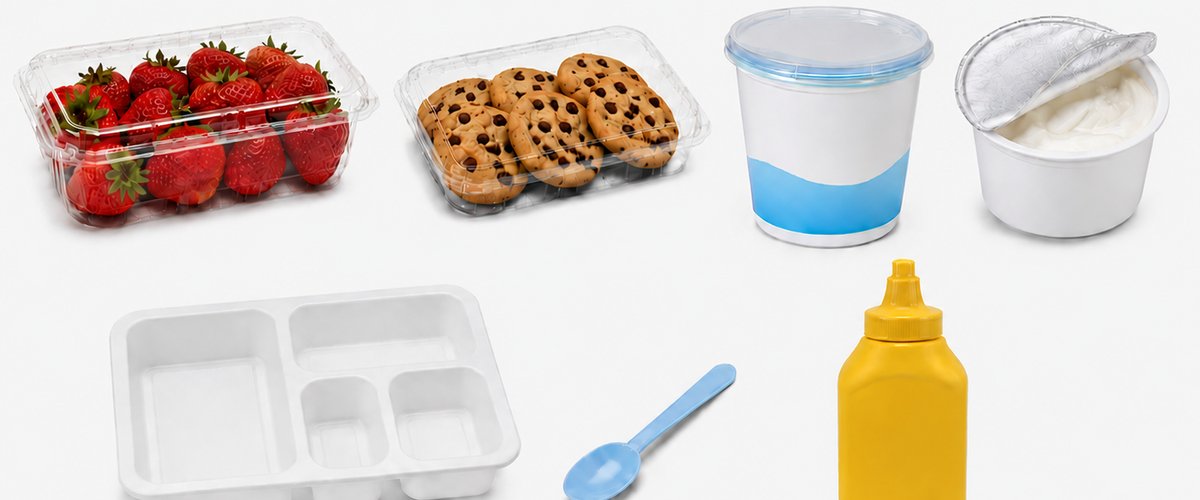
Food packaging — case-study examples from the summit

Packaging focus

Food — rigid, flexible, and freezer-to-heat

Shelf-stable pantry goods plus fresh, frozen, and prepared meals. Three of the ten groups.

What they worked on: Pasta, rice, cereal, coffee, snacks; deli tubs and clamshells; freezer-to-heat trays; condiment packets; multipack shrink wrap.

Reuse & refillEliminationSwitch materialRight-sizePCR

Household packaging — case-study examples from the summit

Packaging focus

Household cleaning and laundry

Rigid bottles, jugs, and tubs, plus emerging refill systems.

What they worked on: All-purpose sprays, dish soap, laundry detergent; trigger sprayers, dip tubes, refill pouches, labels and sleeves.

Reuse & refillEliminationSwitch materialRight-sizePCR
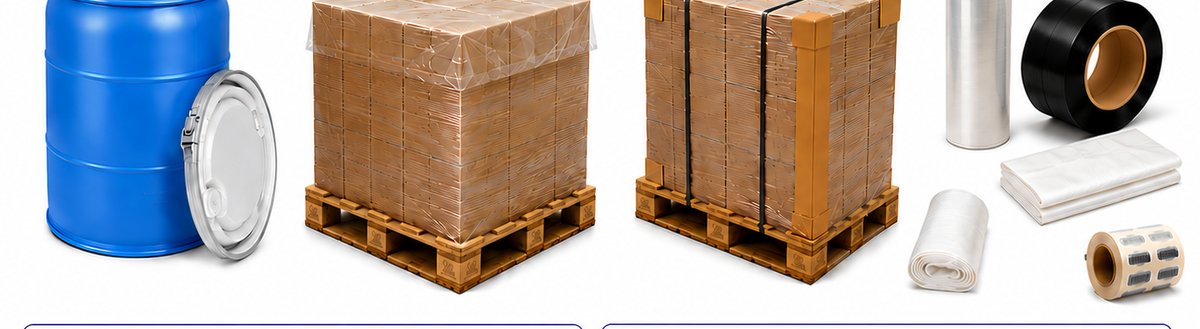
B2B and transport packaging — case-study examples from the summit

Packaging focus

Tertiary and B2B transport

Packaging that moves products between facilities.

What they worked on: Corrugated cases, pallet wrap and stretch film, strapping, dunnage, liners, slip sheets, single-use pallets.

Reuse & refillEliminationSwitch materialRight-sizePCR

E-commerce packaging — case-study examples from the summit

Packaging focus

E-commerce delivery

Packaging for shipped direct-to-consumer orders.

What they worked on: Corrugated boxes, poly and padded mailers, air pillows, film dunnage, tape, labels, return labels.

Reuse & refillEliminationSwitch materialRight-sizePCR
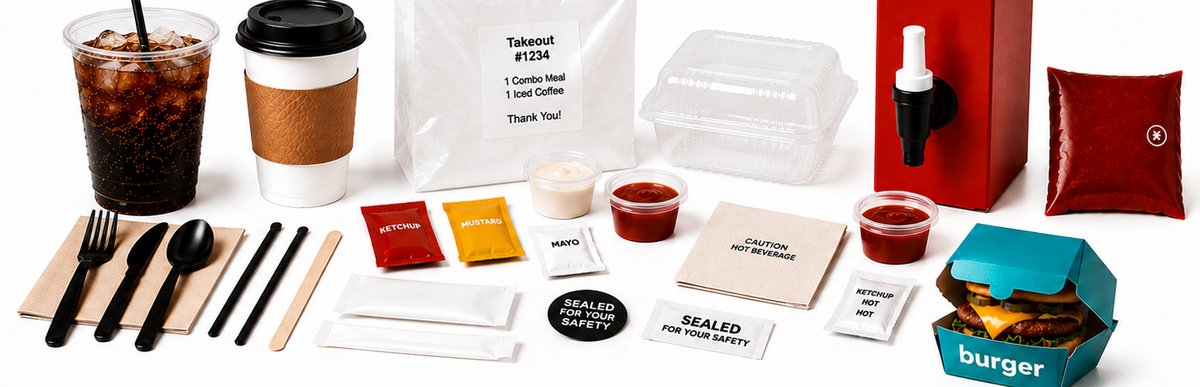
QSR packaging — case-study examples from the summit

Packaging focus

Quick-service restaurants

Cups and containers for prepared food and drinks.

What they worked on: Cups, lids, bowls, clamshells, trays, portion cups; utensils, straws, sleeves, bags.

Reuse & refillEliminationSwitch materialRight-sizePCR
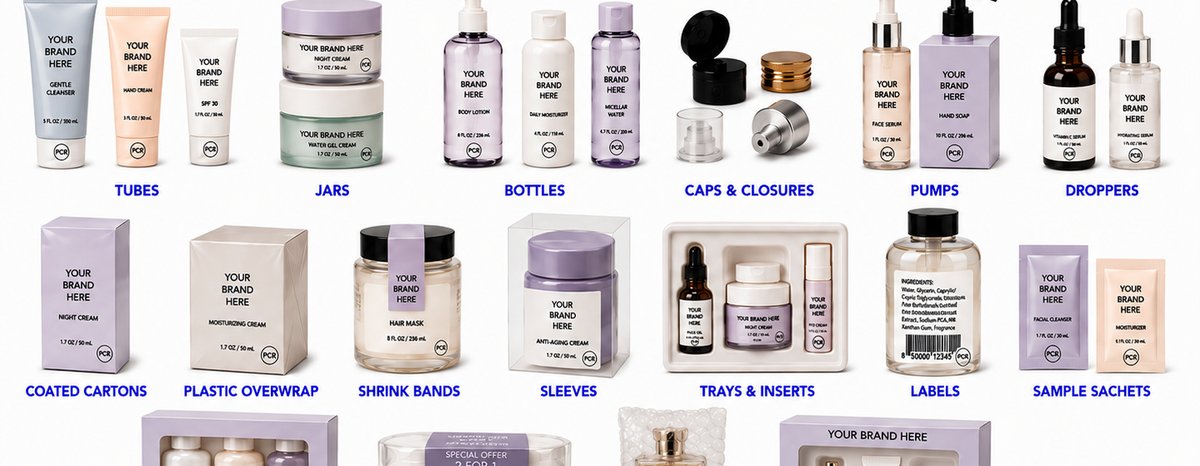
Cosmetics packaging — case-study examples from the summit

Packaging focus

Cosmetics and personal care

Primary and secondary packaging for beauty and personal care.

What they worked on: Bottles, jars, tubes, pumps, droppers, compacts, caps, cartons, sample sachets.

Reuse & refillEliminationSwitch materialRight-sizePCR
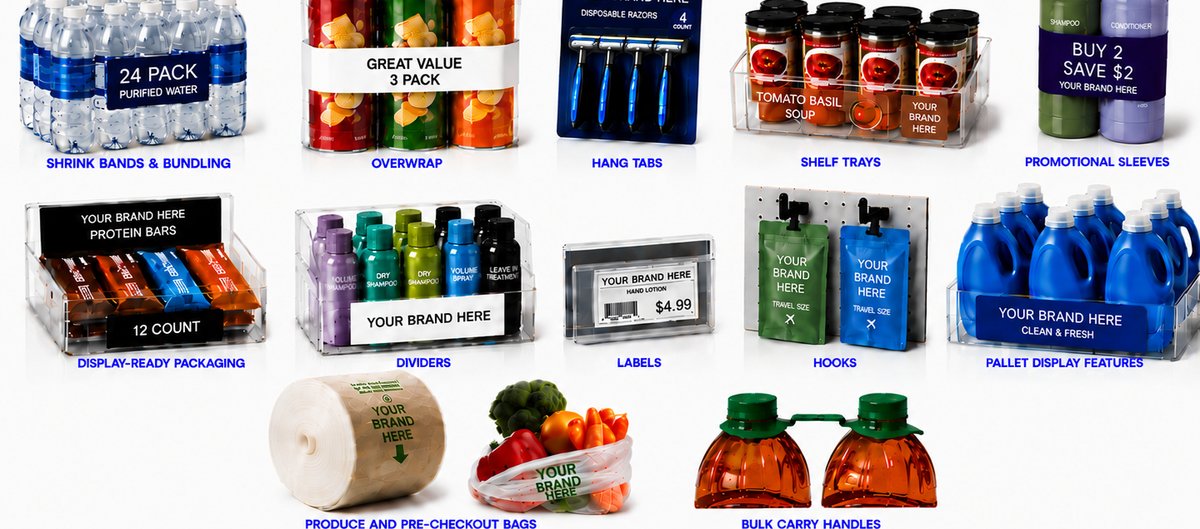
Retail packaging — case-study examples from the summit

Packaging focus

Retail display

Secondary packaging that groups and merchandises products.

What they worked on: Shrink wrap, overwrap, multipack rings, display-ready trays, sleeves, bands, corrugated cases.

Reuse & refillEliminationSwitch materialRight-sizePCR

Beverages packaging — case-study examples from the summit

Packaging focus

CRV-exempt beverages and liquids

Beverage and liquid formats outside California’s CRV deposit system.

What they worked on: Bottles, jugs, cartons, and closures for non-CRV beverages and liquids.

Reuse & refillEliminationSwitch materialRight-sizePCR
03

Four scenarios, and the moves that work in all of them

To choose actions that hold up, participants mapped four plausible futures for packaging policy and markets, then looked for moves that pay off in more than one. The method is straightforward: list the opportunities in each scenario, identify the barriers common to all of them (worth starting on now), and prioritize the actions that return value regardless of which future arrives — the “no-regrets” moves.

Scenario 01

Global standards lead

International rules set the pace and pull U.S. policy up toward them.

Scenario 02

A slow, costly transition

Uneven policy and lagging infrastructure make the shift expensive and drawn-out.

Scenario 03

Health-driven change

Consumer concern about microplastics, more than regulation, drives reduction.

Scenario 04

Market-led change

Demand and economics move faster than the rules, rewarding early movers.

04

The barriers that appear in every scenario

Some obstacles show up no matter which future plays out. Because work on them is never wasted, they are the safest things to start now.

  • Recovery infrastructure isn’t built for what reduction plans assume — the facilities that sort and process material lag the plans on paper.
  • Switching materials under time pressure can move impact around rather than removing it.
  • The federal role on funding and standards is unclear, leaving gaps that states can’t fill alone.
  • Compliance deadlines are tighter than the research needed to choose pathways well.
  • Consumers are attached to convenience, which resists changes to the use experience.
  • Removing material can strand recycling end-markets built around today’s formats and volumes.
05

Six trade-offs you manage, not solve

Beneath the planning sit six standing trade-offs. None resolves cleanly; each has to be re-balanced as conditions change. The first is the sharpest: net reduction is measured against a 2023 baseline and ignores growth, so a growing company can do real work and still show little net change.

Net reduction vs. a 2023 baselinevsReal business growth
Short-term compliancevsLong-term system redesign
Reactive compliancevsProactive redesign
One state’s lawvsA patchwork of regulations
Plastic reductionvsTotal environmental impact
Material-specific targetsvsFull lifecycle impact
06

Five moves participants recommended

These are the actions participants judged worth taking regardless of how the rules land.

1

Build the data layer once

Stand up a component-level packaging database, structured for the attributes suppliers need to fill in. The same foundation serves annual reports, multi-state fee modeling, recyclability claims, PCR tracking, and scenario modeling. Automating even ~75% of it avoids a fresh fire drill every time guidance changes.

2

Bring the whole company in — starting with procurement

SB 54 touches sustainability, R&D, government affairs, finance, legal, procurement, marketing, and operations. Procurement was named the most underused team: it can price options and pull supplier data faster than anyone. Bring finance, marketing, operations, and leadership in early too.

3

Write your assumptions into the plan

State what you’ll do and the conditions you’re counting on — unresolved definitions, expected infrastructure, anticipated supplier moves. Because plan data may become public, this guards against greenwashing and consumer-protection exposure, and it shows the program administrator where system investment is needed.

4

Start with your hardest, highest-volume packaging

You can’t re-engineer tens of thousands of SKUs at once. Find the hotspot categories, model pathway options on a cost-per-pound and cost-per-component basis, and bring leadership real numbers. Tertiary, transport, and B2B packaging were seen as the easiest early wins.

5

Plan in good faith, and treat suppliers as partners

No one has been handed a target percentage. Plans that are too conservative raise costs for everyone; plans that are too ambitious fail in operations. The strongest case study — recycled content in transport film — worked because the supplier acted as a real partner, the change was tested offline first, and it rolled out in stages.

Move 2 is the one participants kept returning to. Several of the functions source reduction depends on weren’t in the room at all — notably data, operations, and executive leadership.

07

What the two days changed

Finding · Readiness

97%
of participants left rating their understanding of the ISRP “moderate” or better — up from a majority who rated it “low” or “very low.”
Source · Anonymous pre- and post-event polls

Coming in, only about 5% of producers rated their understanding of what the ISRP requires as “high,” and most rated it “low” or “very low.” After two days, roughly half rated themselves “high” and 97% landed at “moderate or better.” The detail by question is below. The room did not leave with final rules; it left better prepared to act before they arrive.

Share rating their understanding High or Very High, before vs after the event. Producers on what's required in the ISRP 5% to 52%; producers on packaging actions for portfolio 9% to 58%; suppliers on what producers must plan and do 6% to 57%; suppliers on supply-chain impact 7% to 41%.
Self-rated understanding, before vs after. Share rating it “High” or “Very High.”

What comes next

The plan is a starting point, not a one-time report.

Reading the law correctly isn’t enough. The teams that do well will be the ones that make good decisions while the program’s details are still being finalized. Circle’s role is to convene that work: a neutral room, run under Chatham House Rule and antitrust guardrails, where the industry can learn together. Three things will shape what comes next.

Signal 01

Shared learning, not shared decisions: antitrust lets the industry compare notes, but each producer decides on its own.

Signal 02

The biggest open question is how “source reduction activity” will be weighed against net reduction, and how business growth gets credited.

Signal 03

The binding details land in CAA’s program plan — first draft due June 15, final in October 2026.

Convened & hosted by
Hosted by RTI International
Circle

Anonymized, aggregate findings from the Source Reduction Summit — a June 2026 EPR Readiness Circle convened by Circle (The Circular Policy Leadership Network) and hosted by RTI. Chatham House Rule observed. Reviewed for antitrust compliance.

Nothing here is legal advice or an endorsement of any pathway or strategy; each organization must make its own decisions. Circle endorses shared learning, not shared decision-making. Figures come from anonymous pre-/post-event and welcome/close polls and the case-study stations; sample sizes are noted on each chart.

One of three companion products from the summit, alongside What Ready Looks Like (the build-it playbook) and State of the Summit (the polling).